
Injury, Recovery, and the Courage I Didn’t Plan For

Updated: Dec 18, 2025
2025 wasn’t my year.
Like a lot of people, I ended 2024 with a quiet sense of optimism. The year had been good: solid work rhythm, creative energy, family life humming. I was building new ideas and actually had the bandwidth to think about how to bring them into the world. I traveled often. I ended the year on Vieques; one of those rare trips where you arrive not knowing anyone and leave feeling changed by a handful of days with strangers who somehow aren’t strangers anymore.
And then, in the second week of December, I fell down the stairs in my house.
A freak accident. The kind that happens in seconds and rearranges everything that comes after it.
I started 2025 recovering from major surgery on my right leg, on crutches, with a long and uncertain road ahead. My recovery dragged far past what anyone expected even though I’d been in great shape before the fall. The plans I had for the year didn’t slowly shift; they evaporated.
What replaced them was recovery. And I’m still in it. A full year later and still not able to go up and down stairs normally, run, hike, or dance. All the things I love to do.

What Pain Looks Like Up Close
Most of my year revolved around 8 hours a week of physical therapy. Not the inspirational kind you see on Instagram. The kind where I screamed into a pillow while my therapist tore through months of scar tissue. The kind where I sobbed openly in a room full of other patients, something I hate more than almost anything.
I hate crying. I especially hate crying from physical pain. And I really hate doing it in front of strangers.
This went on for months.
And then I’d leave PT, wipe my face, get in the car, and shift gears back into work, parenting, responsibility. I still had a business to run. Clients to show up for. A daughter who needed stability and presence.
That experience gave me a new respect for people who live with daily pain and still function. Who don’t get to opt out. Who carry something heavy and invisible while the world keeps moving. It’s brutal. And it’s far more common than we like to admit.
Who Held Me Up
I can’t talk about this year honestly without naming the people who made it survivable.
My husband took on far more than his share: household work, logistics, emotional steadiness. In the early weeks, he walked me to the bathroom and stayed nearby while I showered because standing alone felt risky. There was no performance in it. Just presence.
My daughter adapted faster than I expected. She had to. Mom couldn’t just get up. Couldn’t do everything. Watching her grow into a new level of independence changed our dynamic in ways I’m still absorbing.
Friends showed up in the language they knew I’d hear best: food. Soups, salads, meals dropped off for weeks after surgery. No big speeches. Just nourishment arriving at the door.
And then there were the care packages. Artist friends sent their own work- hand-painted ornaments, small pieces they’d made themselves, notes with words that landed exactly when I needed them. Physical reminders that I wasn’t alone, even when my world had narrowed to recovery.
This kind of care doesn’t fix pain. But it steadies you enough to keep going.


The Things People Say When You’re Hurting
Not everyone knows how to show up well in moments like this.
Alongside the care, there were the comments that tried to rush past pain instead of meeting it.
I heard variations of, “At least you didn’t break your neck and die.”
Yes. True. I did not die. (Insert aggressive internal eye roll.)
It’s strange how often people minimize suffering. Not out of cruelty, but discomfort. Pain makes us uneasy. So we compare it, reframe it, or silver-line it before it’s even been acknowledged.
Most of us have probably done this to someone else at some point.
This year made me more attuned to how quickly pain gets ranked instead of witnessed.
When Everyone’s Life Is on Fire at Once
As I was recovering, it felt like the people around me were also getting hit from all sides. Friends and family receiving cancer diagnoses. Close losses to suicide. Divorces. Job loss. Mental health crises that cracked lives wide open.
It wasn’t that one year was uniquely cursed. It was more the realization that at this stage of life, the odds change. Hard things don’t wait their turn. They stack. They overlap. They land on people you love and on you, sometimes simultaneously.
It sharpened my understanding of how fast life can change and how unprepared we often are for the versions of ourselves those moments require.
Doing It Differently This Time
I’ve had hard years before. This one wasn’t my first.
But it was the first time I moved through a year like this without letting the physical pain swallow everything else.
That doesn’t mean I was cheerful or heroic. It means I kept a boundary and it was one I’d never been able to hold before: between what my body was experiencing and what my mind did with it.
There was pain. Real pain. But I refused to let it turn into despair, or to narrate my future as permanently diminished. I knew recovery was possible, even if slow. That light mattered. And I guarded it fiercely.
I think often about people who live with chronic pain where there is no clear timeline, no promise of resolution. This year gave me a deeper humility about that reality.
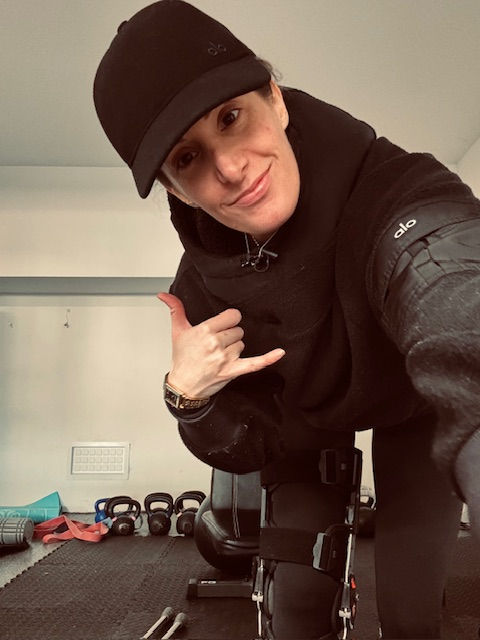
What Becomes Obvious When You’re Running on Empty
Being injured stripped life down fast.
When you’re operating on a quarter tank, there’s no extra energy for things that don’t make sense. No appetite for one-sided relationships. No tolerance for obligations that exist solely out of habit.
I ended relationships that felt draining or misaligned, not dramatically, just quietly. Injury has a way of clarifying things. When you’re well, it’s easy to say yes reflexively. When you’re not, everything costs more.
I got better at saying no. Better at aligning my time with what actually mattered. Better finally (!) at disappointing people without over-explaining myself.
Those lessons were overdue.
Rethinking “Slowing Down”
One of the most common things people said to me after I got hurt was that I needed to “slow down” and “let my body heal.”
What that often implied was passivity as if healing happens automatically if you rest enough or want it badly enough.
Anyone who’s recovered from a serious injury knows that’s not how it works. Healing is work. Precise work. Too much effort and you set yourself back. Too little and nothing changes. I had to learn over and over when to push and when to stop. When discomfort meant progress and when it meant danger.
It wasn’t about grinding or surrendering. It was about discernment. About respecting limits without abandoning agency.
What This Year Left Me With
The past few years, I’ve noticed a growing pull toward narratives that downplay effort. That suggests life unfolds primarily through mindset or self-acceptance alone.
That hasn’t been my experience.
Nothing meaningful in my life (personally or professionally) was willed into existence by hope alone. It came from engagement. From showing up, especially when it was uncomfortable. From doing the unglamorous, repetitive work that healing and growth actually require.
This year didn’t look the way I expected. But it asked better questions than an easy year ever could.
And I suspect many of us are quietly living versions of this story: carrying pain, recalibrating expectations, learning what endurance really looks like when there’s no clean narrative arc.
When a Word Isn’t Enough
I’m not walking into 2026 with a word for the year. I’m walking in with something harder won.
This year stripped away any illusion that I can plan my way out of uncertainty. I can’t control what life hands me; how my body responds, what breaks, what arrives uninvited.
What I can trust is myself.
I trust that when things get hard, I won’t disappear. I’ll show up. I’ll make choices. I’ll do the work that’s required. I’ll ask for help when I need it. I’ll adapt.
That’s the courage I’m carrying forward. Not optimism, not a mantra, not a theme, but a deep, embodied self-trust.
The kind that comes from knowing, without needing to prove it, that whatever hand I’m dealt next…I know how to play it.
Because I always have.


Comments